"Fuck Hamas. Fuck Israel. Fuck Fatah. Fuck UN. Fuck UNWRA. Fuck USA! We, the youth in Gaza, are so fed up with Israel, Hamas, the occupation, the violations of human rights and the indifference of the international community! "We want to scream and break this wall of silence, injustice and indifference like the Israeli F16s breaking the wall of sound; scream with all the power in our souls in order to release this immense frustration that consumes us because of this fucking situation we live in... "We are sick of being caught in this political struggle; sick of coal-dark nights with airplanes circling above our homes; sick of innocent farmers getting shot in the buffer zone because they are taking care of their lands; sick of bearded guys walking around with their guns abusing their power, beating up or incarcerating young people demonstrating for what they believe in; sick of the wall of shame that separates us from the rest of our country and keeps us imprisoned in a stamp-sized piece of land; sick of being portrayed as terrorists, home-made fanatics with explosives in our pockets and evil in our eyes; sick of the indifference we meet from the international community, the so-called experts in expressing concerns and drafting resolutions but cowards in enforcing anything they agree on; we are sick and tired of living a shitty life, being kept in jail by Israel, beaten up by Hamas and completely ignored by the rest of the world. "There is a revolution growing inside of us, an immense dissatisfaction and frustration that will destroy us unless we find a way of canalising this energy into something that can challenge the status quo and give us some kind of hope. "We barely survived the Operation Cast Lead, where Israel very effectively bombed the shit out of us, destroying thousands of homes and even more lives and dreams. During the war we got the unmistakable feeling that Israel wanted to erase us from the face of the Earth. During the last years, Hamas has been doing all they can to control our thoughts, behaviour and aspirations. Here in Gaza we are scared of being incarcerated, interrogated, hit, tortured, bombed, killed. We cannot move as we want, say what we want, do what we want. "ENOUGH! Enough pain, enough tears, enough suffering, enough control, limitations, unjust justifications, terror, torture, excuses, bombings, sleepless nights, dead civilians, black memories, bleak future, heart-aching present, disturbed politics, fanatic politicians, religious bullshit, enough incarceration! WE SAY STOP! This is not the future we want! We want to be free. We want to be able to live a normal life. We want peace. Is that too much to ask?" http://www.guardian.co.uk/world/2011/jan/02/free-gaza-youth-manifesto-palestinian The meeting takes place in a bare room in a block of flats in the centre ofGaza City. No photographs, no real names – those are the conditions. This is the first time that a group of young Palestinian cyber-activists has agreed to meet a journalist since launching what it calls Gaza Youth's Manifesto for Change. It is an incendiary document – written with courage and furious energy – that has captivated thousands of people who have come across it online, and the young university students are visibly excited, but also scared. "Not only are our lives in danger; we are also putting our families at risk," says one of them, who calls himself Abu George. Gaza Youth's Manifesto for Change is an extraordinary, impassioned cyber-scream in which young men and women from Gaza – where more than half the 1.5 million population is under 18 – make it clear that they've had enough. "Fuck Hamas..." begins the text. "Fuck Israel. FuckFatah. Fuck UN. Fuck UNWRA. Fuck USA! We, the youth in Gaza, are so fed up with Israel, Hamas, the occupation, the violations of human rights and the indifference of the international community!" It goes on to detail the daily humiliations and frustrations that constitute everyday life in the Gaza Strip, the Palestinian slice of land that Israel and Egypt have virtually sealed off from the world since Hamas was elected to power in 2006. "Here in Gaza we are scared of being incarcerated, interrogated, hit, tortured, bombed, killed," reads the extraordinary document. "We are afraid of living, because every single step we take has to be considered and well-thought, there are limitations everywhere, we cannot move as we want, say what we want, do what we want, sometimes we even can't think what we want because the occupation has occupied our brains and hearts so terrible that it hurts and it makes us want to shed endless tears of frustration and rage!" The text ends with a triple demand: "We want three things. We want to be free. We want to be able to live a normal life. We want peace. Is that too much to ask?" On Facebook, the group calls itself Gaza Youth Breaks Out. When the cyber-activists wrote the manifesto three weeks ago, they gave themselves a year to gather enough support before thinking about further steps. But their text has travelled around the world at an unexpected speed and has harvested thousands of supporters, many of them human rights activists, who say they are ready to help. Now, the authors are dealing with the impact of a document that could be a turning point in the life of the Strip. "We did not expect this to be so big," one of them admits. Eight people – three women and five men – wrote the text. They are normal students, from the more secular elements of Gazan society. All declare themselves to be non-political and disgusted with the tensions and rivalries that divide Palestinians between Hamas, the rulers of Gaza, and Fatah, the more secular party which governs the Palestinian Authority, based in the West Bank. "Politics is bollocks, it is screwing our lives up," said one member of the group. "Politicians only care about money and about their supporters. The Israelis are the only ones benefiting from the division." Two of the group have been detained by the Gazan authorities several times, accused among other crimes of "immoral" behaviour. They say that they have been abused in jail and claim that physical and psychological punishment is commonplace in Gaza's detention centres. Another one obtained a scholarship to attend a workshop at an American university, but he says Israel did not issue a permit that would allow him to leave the Strip. "We are supposed to be the engine of change in this society, but our voices are muted. In the press, at university, there is no room in our society to talk freely, out of the frame, without putting yourself and your family at risk," says one, who wants to be called Abu Yazan. He adds: "In Gaza, you feel watched at school, in the streets, everywhere. You can be thrown into jail at any time. [Hamas] will threaten you with ruining your family reputation and that would be it." These youngsters do not represent anybody except themselves, but their call for change has resonated strongly, not only abroad but also inside Gaza. Their Facebook page already has thousands of friends – including, they say, many from the Strip. The causes of frustration are legion. The Israeli blockade forbids Gazans to travel in and out of the Strip without a permit, which is difficult to obtain. For Gazan students who wish to study abroad, the most difficult part is not being accepted at a foreign university or getting a scholarship, but simply being able to travel. Inside the Strip, things do not get much better. Israeli shelling which follows the launching of rockets into Israel by Palestinian militants is part of their everyday life. Power cuts and ruinous sanitary conditions are among the side-effects of the embargo suffered by Gaza's inhabitants. With high unemployment in the Strip and little access to other job markets after graduation, many feel that they have reached a dead end. Some keep studying and accumulating degrees and foreign languages, which they learn via the internet, hoping for better days to come. Others kill their time smoking hookahs with their friends day after day. There is an increasing number who rely on drugs to cope with their conflict traumas and frustrations. Going out, meeting friends in cafés – let alone clubs or discotheques – or attending cultural events has become an increasingly complicated task as Hamas cracks down on western "decadence". In Gaza there are no theatres and few concerts aside from the Islamic musical performances organised by the Hamas authorities. In the places where young men and women are allowed to meet, considered an "oasis" by the less conservative youth, the police are quick to interrogate mixed couples suspected of not being married or engaged. The "last straw" for the writers of the Gaza manifesto came a month ago, when Hamas closed Sharek, an internationally financed organisation offering training and summer activities for thousands of adolescents and young people. Sharek had also became a hang-out place for the more liberal-minded in Gaza. Human Rights Watch recently issued a statement condemning its closure. "Hamas authorities in Gaza should allow an organisation that helps children and youth to reopen, and penalise officials who have harassed its workers," it said. According to Ihab Al Ghusain, a spokesman for the Hamas Ministry of the Interior, the problems highlighted by Gaza's disaffected youth are sometimes the result of over-zealous officials. "There are no laws prohibiting men and women sitting together in public places in Gaza," he said. "But some policemen at their own initiative interrogate the couples. Those policemen should be punished." He says that proof of the government's commitment to Gaza's young generation is that it has declared 2011 the Year for the Youth. But the authors of the youth manifesto are unlikely to be persuaded by such symbolic initiatives. The group is currently investing most of its time and energy in debating new strategies to pursue a web-based platform for change. The new year may yet become one for the youth of the Strip, but perhaps not in the way Hamas intended.The manifesto
Tuesday, January 25, 2011
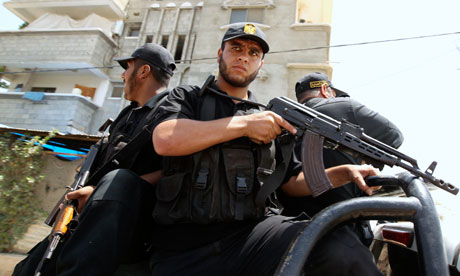
Gazan youth issue manifesto to vent their anger with all sides in the conflict
Felani’s Hanging Body, Connectivity and our quiet Government
http://unheardvoice.net/blog/2011/01/13/felanis-hanging-body-connectivity-and-our-quiet-government/ A new year came upon us, so is the 3rd year of the government of Sheikh Hasina- HM Ershad- Hasanul Inu – Maolana Misbah-Ul-Islam- Comrade Moinuddin Khan Badal. Under siege by police and neo-gestapo RAB; the new years eve was fairly uneventful. At least there was no public display of sexual harassment in the form of a torn clothe student at Dhaka University Student center premises. There were some upheavals though. The long line for the upcoming World Cup Cricket tickets were lead news/ talking point in the news media. The world cup ticket hoopla was duly followed by nearly 24/7 news coverage of the roller coaster ride of the stock market. TV news as well as the talk shows were all filled with footage of angry investors, bleeding from RAB baton Charge, rallying and pelting stones at nearby cars and government offices. The Government took the challenge politically and made sure that the following day the stock index rebound with a two fold vigor. Other than all these discussable and forgettable stuff, the new year as well as the second year anniversary of Hasina Ershad brother sister Government was supposed to be a happy and holy event. Well… except for the unhappy and ugly scene of a bright red deep blue spot hanging fifteen feet above the ground on our horizon. It is irony that her name was Felani. Like Kurani, Felani is Generic name in Bangla literature. While Kurani is the name of a little girl living on the street, Felani usually describes an orphan or poor girl who serves her master’s household 24/7 only two get abused and deprived. Felani was a born in a very poor family in Northern Bangladesh. It is that region of Bangladesh where ‘Monga’ — seasonal shortage of work and food is endemic. In quest of the most basic of basic human needs, at least once or twice a day food to meet hunger, five year old Felani, her parents, along with many others like them, crossed international political border and managed the lowest wage job in a far away land, in Southwest India. They would do the hardest and lowest paid jobs which even the locals would pass. At least there was a job for little Felani and her family and that ensured food to eat. While politicians can have political borders, basic need like hunger does not care for any border. While working as a child laborer carrying and washing brick in a far away land, Felani grew up and reached marriageable age per the standards of rural poor sections of Bangladesh. She was returning home after ten years to get married. All were set up. Poor folks cross the border for meeting basic living needs. They don’t read newspapers or blogs. They don’t understand India’s growing stature and accompanying security concern. They only heard that there are jobs in this and that far away land. The procession is rather big. Some will stop in nearby Calcutta, some will travel to Delhi, Bombay and half of them will cross another fearsome border to land in Karachi, Pakistan. Nahari’s mother used to help run errands in my grandmothers rural home in Chittagong. Two of her sons work in Pakistan. I met them during one of my trips. Many of them don’t have passport, visa — some don’t bother spending all the airfare money. For them getting into India costs more money and there are higher chances of getting arrested. Crossing border into Bangladesh costs much less, no chance of getting arrested but there are chances of getting killed. Indiscriminate killing of Bangladeshis in Indian border started soon after independence. But over the last few years the killings have become a near daily event. In a blog post Rezwan compiles different write ups on this issue and quotes Bangladeshi Human Rights organization Odhikar this way, Bangladeshi human rights organization Odhikar says in a report that BSF kills one Bangladeshi in every four days. It also says that BSF killed 74 innocent Bangladeshi citizens in 2010, injured seventy-two and kidnapped 43. In the past decade more than 1000 Bangladeshis were killed in the border regions by BSF. Like 13 year old Parul who was shot by Indian security, Felani was shot as she her traditional clothes got stuck high up in the barbed wire fence. Felani was alive reportedly at least 4 hours after being shot. Local villagers report hearing her screaming and asking for water. Felani bled to death. In the photos we see, blood could not be distinguished from her bright red and deep blue dress. Local people protested. Bangla blogosphere erupted. Some newspapers ( especially those cunning-smart ones who can read peoples pulse way in advance) published the news. And yet some folks saw Jamaati conspiracy to hamper “war Crimes trial” in Felani’s hanging dead body. Like the comment on a facebook page where image of Felani’s hanging body was posted. As one soul, in that facebook page, rather getting upset at the photo, questioned the source of the photo, other replies, ” It must be an act of the Jamaatis”. The Government kept quite quite. Not a single word about Felani could be heard from the mouth of our ever talking prime Minister or her men-women. Felani means disposable. Felani is really disposable to our Government. Felani’s death is not important enough to seek justice for or start a trial process. We want connectivity. We are enclosed with 15 feet high barbed wire from all sides to prevent connecting, yet we are for connectivity. Our folks are being shot and killed indiscriminately. Shoot at sight if caught in the process of connecting. Hell Yeah. We are for connectivity. India’s truck, 18 wheeler lorries will drive through Bangladesh via special road built for them with our peoples’ money. But Parul or Felani or many Shafiq, Rafiq, Karim, Habib will be shot to death if seen crossing India-Bangladesh border. If we talk more connectivity, more regional cooperation, like EU, why can’t we have EU style open border? Let’s open our borders. Let’s real economic cooperation begin. Let our Felani’s and their parents travel fearlessly providing cheap labor to the growing economies in this region.
The Water Wars
http://www.tehelka.com/story_main48.asp?filename=Ne290111Thewater.asp You can lease a river in Chhattisgarh for 22 years. At just Rs. 1 per annum. While thousands go thirsty Rivers belong to nations. But, in Chhattisgarh they belong to corporations. BABA UMAR tracks the sale of six rivers in the state IN MAHMARA village of Durg district in Chhattisgarh, Ramoram Thakur, 70, recalls how as a boy he would sing and hear folklore about water, fishermen and farmers of his village, tucked into the western edge of Sheonath river. However, such legends have a tragic ending nowadays. Seated near a babul tree in the community choupal, the old man shares stories with children about how the river passed onto the hands of a private company, which denied villagers water for drinking, washing and irrigation, stopped fishermen from casting their nets and prevented locals from taking sand from the riverbed. “Their barrage drowned a cremation ground on the banks. Dozens of village located downstream were left with little water. What belonged to us for centuries is no longer available for our use,” he laments. Thakur is talking about the Sheonath, the first river to be handed over to a private group, Radius Water Limited (RWL), in 1998 by the government of undivided Madhya Pradesh through its undertaking, MP Aydhyogik Kendra Vikas Nigam Ltd (MPAKVN), now Chhattisgarh State Industrial Development Corporation (CSIDC). Despite major losses to the government, the state didn’t scrap the deal nor could it help the thirsty villagers. Since then, Chhattisgarh has seen hundreds of companies investing in the state and many vying for the river waters. In a recent deal, the Water Resource Department (WRD) gave its nod to 141 private and government projects for which it will be supplying nearly 2,600 million cubic metres (mcm) of water from rivers every year. Interestingly the state supplies only 2,000 mcm of water for irrigation every year. Carved out of Madhya Pradesh on 1 November 2000, Chhattisgarh wasn’t a water-scarce state. According to unofficial estimates, the state has 32,000 ponds. With major river basins — Mahanadi, Godavari, Narmada and Brahmani Kachar — and several major rivers — Kurkut, Mahanadi, Kharun, Sheonath, Indravati, Jonk, Kelo, Sabri, Hasdev, Peri, and Maand — water shortage was never an issue. But the priorities have changed. Earlier, dams were built to store water for irrigation. Now, they are being constructed for supplying water to industry. In fact, the Chhattisgarh government openly declares that it is committed to giving water to industries throughout the year but not to farmers for rabi crop. THE SALE of Chhattisgarh’s rivers began in 1998 when the then MP government handed a 23.6 km stretch of Sheonath river in Durg to RWL, pleading shortage of funds for supplying water to industries. In a shocking story of “corruption and favouritism”, as an Assembly nominated committee discovered later, the Rs. 9 crore project was signed on 5 October 1998 between MPAKVN and RWL on a build, own, operate and transfer (BOOT) basis. The plan was to build a barrage on the Sheonath to supply up to 30 million litres per day (mld) to the Borai Industrial Centre. Construction was completed in two years and operations began in January 2001. “We got to know about the sale of the river only when RWL began harassing us,” alleges Khemlal Sahu, a farmer in Mahmara. “Almost 25 percent of the villagers are fishermen. They were stopped from fishing. Soon, fencing around the 23.6 km stretch began. Iron gates were erected on both sides of the barrage to prevent locals from approaching the river.” The deal inherited by the CSIDC gave RWL exclusive access to the river water for 22 years. It also held control rights over the supply of water to the Borai Industrial Centre and the CSIDC was obliged to provide land free of cost. CSIDC also handed over its entire infrastructure in Borai, and assets worth Rs. 5 crore to Kailash Soni, owner of Kailash Engineering, for a lease of a token Rs. 1 per year for establishing a water supply project on BOOT basis. The CSIDC was to purchase water from RWL and later sell it to the industrial units in Borai. Though there was a lack of sufficient demand for water, then MPAKVN managing director GS Mishra signed the agreement with RWL. Back then, Borai had two large and medium-scale industries, and their combined water requirement was between 1.14 and 2.5 mld, while the CSIDC had to compulsorily shell out money for 4 mld. Adding to the losses, CSIDC purchased water at Rs. 15 a cubic metre (1,000 litres) from RWL. However, it sold water to industries at only Rs. 12 a cubic metre. The agreement meant that CSIDC would incur a loss of 20 percent on every unit of water it sold. Increase in both supply or demand would mean higher losses. Adding to the toll was Hindustan Electro Graphite (HEG) that was to buy almost 90 percent of the CSIDC’s water sales but reneged on its agreement. While CSIDC continued to incur losses, public outrage fuelled by continuous harassment of people by RWL saw several NGOs participating in the agitation. Those who joined the protest included villagers from Mohlai, Boludi, Malood, Kotni, Piperchadi, Kekro Koli, Bedwa Pathra, Vagrum Nala and Basik Hai — all affected by the drying up of the Sheonath downstream. The Nadi Ghati Morcha (NGM) started a movement from Durg that reached Raipur and then Delhi. Roadblocks and rallies were held. The ferocity of the protests finally forced the then chief minister Ajit Jogi to announce the “abrogation of the RWL contract” on 2 April 2003. However, he didn’t keep his promise. NGM coordinator Gautam Bandhopadhyay says, “People had plenty of fresh water for cooking and working. But they don’t have rights over the common property. RWL may have invested money but the villagers who are living in the area for centuries have invested resources and have equal rights on the water.” ‘The government is ruining its resources. By favouring the private firms, it is harming the interests of the tribal farmers’ RAMESH AGARWAL,Founder, Jan Chetana PHOTOS: TARUN SEHRAWAT In 2003, the state Assembly constituted a Public Accounts Committee (PAC) to probe the privatisation of Sheonath. The committee presented its report on 16 March 2007 lambasting both CSIDC and RWL for signing a deal that caused loss to the state exchequer and harm to villagers. THE GOVERNMENT vowed to cancel the contract “within a legal framework” and pay compensation to RWL for the lease period after the legal department and the Advocate General give their opinions. The legal department reportedly said, “If the government ends the contract, it has to pay a compensation of Rs. 400 crore.” Since then, nothing has changed. RWL continues to manage the barrage and the reservoir while the spate of public protests too has declined and so has their impact. Ramchandra Singhdeo, who was the irrigation minister when the deal was struck, says, “Without the knowledge of the irrigation secretary, engineer-in-chief and myself, the CSIDC managing director signed a deal that proved detrimental to both villagers and government. We sought action reports from the government over the PAC’s recommendations but the usual reply was: the legal department is looking into the matter. I don’t know why the government is reluctant to scrap this deal.” Current CSIDC MD Devendra Singh says the contract can continue as it has started to reap benefits. “Earlier, CSIDC was making losses. But now we are selling 8-9 mld of water to half-a-dozen big and small companies at beneficial rates,” he says. Singh is quick to add that scrapping the agreement would mean CSIDC paying Rs. 36 crore to RWL as compensation. Water Resource Minister Hemchand Yadav concedes the deal between CSIDC and RWL was “flawed and skewed” in favour of the latter. The government is willing to scrap the contract and pay Rs. 10 crore to RWL as compensation. “This deal affected several villages and the government. I guess the controversy will die in a year,” he says. But will RWL accept Rs. 10 crore? “If the contract is stopped before its term, the termination clauses have to be fulfilled. But nothing like that is going to happen,” says a defiant Pramod Agrawal, RWL project director. Lashing out at the PAC, he says it has no jurisdiction over the issue, which is in the domain of the public undertaking committee. “But the public undertaking committee was never formed by the state Assembly. Even PAC members never talked to us. It’s a farce. We reject it,” he says. Agrawal says three other projects — New Capital Water Supply, Siltra Industrial Estate Water Supply and Urla Industrial Estate Water Supply — were also privatised “and if our project is terminated, these projects too should be abrogated. Why isn’t anyone talking about these projects? We are convinced the government or the CSIDC don’t have the money to compensate us and abrogate the agreement”.FOR A FEW LITRES MORE
The industrial revolution is coming at a heavy price90
paise is the price Jindal Steel and Power Limited pays for every 1,000 litres of river water. Other companies are charged about Rs. 3 for the same23.6 km
is the stretch of Sheonath river controlled by Radius Water. The area has been fenced and villagers are prohibited from using the water54
million cubic metres drawn annually by Jindal Steel from Kurkut river. The agreement, signed on 14 January 2008, will be renewed after 30 yearsRs. 185 cr
revenue loss suffered by the Chhattisgarh government during 2007-08 because of “undue benefits” provided to private companies2,600
million cubic metres allotted annually to companies investing in the coming years. In contrast, agriculture and irrigation will get only 2,000 mcm
|


how and why i became a stone pelter
http://kashmir-hr.blogspot.com/2011/01/how-and-why-i-became-stonepelter.html
Note from Kafila:
Given below is a note written by a Kashmiri student from downtown Srinagar who calls himself ‘Kale Kharab’, meaning ‘hot headed’. Taken from his blog, the note reads like a personal manifesto, a statement of purpose, a testimony more telling than what the most patient interviewer can elicit. This note gives you more insight into what is happening in Kashmir than a lot of what you may have read or seen on TV news about the killing of 115 protestors across Kashmir in 2010 by Indian forces. This testimony, written early on during the uprising, on 30 August 2010, shows how irredeemably India has lost the plot in Kashmir all over again, with a new generation of Kashmiris.
by KALE KHARAB
I am from downtown srinagar born in 1991. I was admitted to one of the best school of valley. As a child I had dream to became engineer. Whenever somebody used to ask me about my aim I would proudly say engineer. As I started to grow up I started to became familar with many words which everyone used to talk about that among them few were “azadi” (freedom), “hartal” (shutdown) but I was unable to understand the meaning of these words. I loved the word hartal as it was holiday, so I always wished for hartal. As I grew up I came to know about mujahids. I used to listen stories of mujahids. I would oftenly ask my elders to tell me about mujahids. They told me stories of many mujahids like Issac, Ishfaq, Jan Malik which I liked to share with my friends.
Even I was named after a shaheed mujahid (martyr fighter) who was killed before few weeks I was born. Then came 2007. Once I had to visit Nowahatta. It was month of Muharram. There was heavy stone pelting going on. I found it very intresting. I saw youth pelting stones and shouting freedom slogans. Initially I was afraid to go in front and pelt stones on Police and CRPF.
I used to think they are some angels fighting on the front. Days passed. Now I too had gathered guts to pelt stones on the frontline. It was now 2008 I was busy with my exams. I heard about Amarnath Land Row. Things started changing very fast I had never seen kind of hartals (shutdowns) before. I had never seen kind of stone pelting before. It was totally new expirience to me.
Now tear gas shell wasnt shot anymore, now bullets were fired directly. I saw many boys hit by a bullet and dying on spot. I was disturbed by this. I asked my grandfather once why they directly shoot on us. His answer was “cze chuk mangaan azadi” (u are asking for freedom). This answer changed my mind. I started realizing neither we are part of India nor India considers us their part.
Now I started reading history about our freedom struggle. I came to know about many things about the Kashmir struggle. Now I started reading newspaper, magazines very keenly. I started observing everything about the poltical system. I wept when I read about Gawkadal, Zukura, Hawal, Bijbihara, Sopore, Kupwara massacares. I too wanted to became mujahid.
i once joked with my mother that i will become mujahid, her answer was painfull, first give me poision then you will become mujahid.
Came 2009 I again started to remain busy with my studies but whenever there was stone pelting in Nowahatta I used go there and pelt stones. stone pelting for me now, has become a reactionto the attrocities and d illegal occupationof india. i do it for a cause.
I was once caught by police and was put in custody I was also beaten but that also couldn’t break me. When I was released I again started pelting stones. A policemen in custody told me why you pelt stones, do you think you will get freedom by pelting stones. If it is the case I am also ready to pelt stones, he said.
but still it is the only thing which makes me feel that gun or bullet cannot supress my thoughts
my sentiments and to live in occupied i want to be free…..
I am happy when I pelt stones because I want to take revenge for every innocent killing. I know my stone wont harm them but remember it is not stone it is my feelings. I pelt stones because we are oppressed.
It was june 2009 shopian rape and case occured. it was unbearable to hear rape and murder case of a girl and her sister in law. Tears rolled from my eyes when i read story of asiya in newspaper. once again hartals, stonepelting emerged with more boys felling to bullets to a response for protesting for justice from brutual indian militiary.
I watched a press confrence of omar abdullah on news channel promising to bring culprits in front of people and punish them in 24 hors. Honestly i was happy with his promise i saw a hope in him in bringing justice to the duo.
But nothing happened instead of justice their relatives were beaten. This made me more agressive i wanted to take revenge, i wanted to punish murderers. More ever i considered cm for all this because his behivour made me much agressive much angry against india and their brutuallity here.
After one month of continous hartals(strikes) life was back to track. Again we started to remain busy with our studies.
But i always used to think why didnt the duo got justice i once had seen news of a 14 year old girl from delhi who was killed by unknown person in her bedroom. But Police wasnt able to solve the case. It was then handed over to CBI who arrested the culprits in few weeks.
But in case of kashmiri CBI solved the case differntly they didnt arrested the culprits but made a funny story of the victims that they died due to drowning in stream whose depth was hardly upto knees. This clearly showed policy of india in kashmir.
But whom could i ask these questions why didnt they get justice? why they shoot us if we protest for seeking justice? these questions always were in my mind. By pelting stones i dint got answer but i was happy i felt i am taking revenge by pelting stones but wat else i could do who was their to listen me. I felt stasfication by pelting stones by pelting stones i wanted to say them give us justice leave our kashmir let us leave in peace let us live in place where no mother has fear that her son may return dead. these are not stones these are my feelings.
Came 2010 it was january once i saw wamiq farooq Wamiq was neigbour of one of my relatives residing at rainawari area of srinagar. wamiq was very good boy he used to offer my times prayers. He used to call me baya(brother).
After few weeks on one friday evening i heard that a boy has been martyred after hitting by tear gas shell but i didnt know unfortunately it was wamiq the same guy whom i had seen before a day. when i woke up next morning i saw a picture of boy whose identity was yet to be revealed in newspaper. After few minutes i got call from my cousin that wamiq has been martyred. for few minutes i was totally freezed i wasnt able to speak. a boy hardly 13 was no more. You can understand how it feels when you hear death of person whom you know.
Wamiq was like my lilttle brother i had never thought a innocent young boy will fell prey to their brutuallity. Once again hartals(strikes), and stonepelting emerged with more boys getting injuried and martyred. Indian occipatinal forces were responding with more brutuallity i agree with thier brutiuality because they are occupatinal forces their cruelity and brutuality is not a surprise to us but i was surprised by the role of jammu and kashmir police our local police they are playing absurd role. One fails to understand the cause of their cruelity and brutulity, Is it they want to show more loyality to india or they are killing their brothers for money. what ever the reason is but the way they behave with their own countrymen is painful. Maybe they have became blind because of power goverment has given to them.
Wamiq’s death gave brith to a powerfull revolution. The revolution which shaked the existance of indian rule in kashmir. Now india started to show their milittary power to unarmed civillians. The way they deal with protests is answer to those people who call india integral part of kashmir.
India has started to engage its every front to curb this revolution from politically to techinically even media is being used to curb this revolution.
Streets of kashmir have become red with the blood of innocent people. Jehlem has become red with blood of innocent people.
I know one day may be i will also fell to their bullets even i am mentally prepared for that because i have attained extreme limit of stone pelting. But remember my death will give brith to hundreds of kale kharab (hotheads). As i became kale kharab (hothead) after death of innocent boys from last three years. 65 death have alredy given brith to hundreds of kale kharab (hot head) who are ready to fight till their last breath. These kale kharab (hothead) are present at every corner of kashmir. What ever will the future of present intifada but the struggle to free kashmir will continue even if takes 100 more years. Next generation will produce more dangerous kale kharabs (hot heads) to free kashmir.
http://stonepelter.blogspot.com/
The New Cellu-lar Jail
The writers are activists based in Chennai working on issues of land, labour, industry and SEZs.
Sriperumbudur grabbed media attention in 1991 when former Prime Minister Mr Rajiv Gandhi was assassinated during an election rally. Since then, this nondescript little village-town in west Chennai, dotted with paddy fields and large expanses of natural water-bodies, has transformed itself into a little ‘Shenzen’- world’s largest special economic zone in Southern China, which churns out one out of every eight mobile handsets sold anywhere in the world. Slated to attract investments worth $4 billion in electronics and automobile manufacturing, Sriperumbudur is now home to the largest mobile handset making factory of Nokia, a Finnish company that can churn out 7.5 lakhs handsets a day. This town and its neighbouring region is also known as the Detroit of India, churning around 12,80,000 cars every year. With a booming manufacturing industry and a promise of 2 lakhs jobs, Sriperumbudur is touted as the jewel in the industrial crown of Tamil Nadu. But of recent this seemingly success story has turned a little sour.
The jewel has a tarnish which the state government does not know how to hide anymore: growing labour unrest, demand for unions, and frequent strikes.The state’s response has been swift—arrest the ‘erring’ workers and bust the unions. And it does that quite cleverly. It’s done as neatly as is the ‘clean’ image of these sophisticated modern industries, barring a few instances where police has lathi charged the workers.
“Their modus operandi is to form a party affiliated union, broker deal with the management, get the workers back to work and whoever does not fall in line, have them arrested or have their jobs terminated. Pretty neat. ”, alleged A Soundarajan, state general secretary of Centre for Indian Trade Union (CITU). Soundarajan and his colleagues should know better. They are out on bail after being incarcerated for 15 days in Vellore Central Jail in October. Their crime: daring to form a union and organising a strike in Foxconn India Limited, a Taiwanese MNCs. While the CITU leaders and workers were in jail, Dravida Munnetra Kazhagam (DMK)-affiliated Labour Progressive Federation (LPF) union, which also has a union in Foxconn, brokered a ‘long term wage settlement’ with the Foxconn management, thereby compromising on the workers’ demands.
“This is a repeat of what happened in the 1960s. At that time, the congress-led government did the same thing during the strikes in MRF, Ashok Leyland, TI Cycles. Used party affiliated union to broker compromised deals to break genuine worker’s strikes”, said Soundarajan. For about 60 days since 24th September, the young workforce of Foxconn India, a special economic zone (SEZ) and a key supplier of electronic components to Nokia SEZ, were sitting on strike demanding better wages, good service conditions and recognition of their trade union . “We get very low wages. Trained permanent employees who have been with the company for more than 3 years get only about Rs 4500 per month,” said Dinesh of the CITU-affiliated Foxconn India Thozhilalar Sangam who is one of the 23 workers suspended for engaging in unionizing activities. “We have rejected the wage agreement reached between the management and Foxconn India Thozhilalar Munnetra Sangam (LPF). They did it behind our backs”, added Dinesh.
As per the ‘wage settlement’ published on 12th October by Foxconn management, workers will get a maximum gross salary of Rs 9500 per month staggered over a period of three years and starting with Rs 7830. “We had demanded Rs 10,000 per month as gross salary for the permanent workers, but the LPF union cut a deal for lower wages with the management and settled the dispute. The state government actively participated in this process through the labour commissioner’s office,” informed Soundarajan. “Things get desperate when the strike goes on for so long. We had so many rounds of talks with the labour commissioner, besides meeting the ministers, including the Chief Minister. But nothing came out of it. Management did not even reinstate the suspended workers. It is specifically targeting workers affiliated with our union”. The workers allege that the management is demanding a written undertaking from the suspended workers ‘to not join the union’ before they can be reinstated.
Unlike in Maharashtra and West Bengal, there is no law in Tamil Nadu which makes it mandatory for the private companies to recognize trade unions. Foxconn workers were forced to call off their two-month-long spirited strike, their demands unmet and 24 of their colleagues still suspended from job. Similar strikes were witnessed recently in a Chinese SEZ called Build Your Dream (BYD Co) in Sriperumbudur. On 21st October, 4000 permanent and contract workers of BYD Co went on strike. They were demanding 8-hour work shift, permanent employment, better amenities and right to associate. The same day BYD management and officials from the State Labour Department assured the striking workers that their demands will be ‘negotiated’. Workers resumed work the next day. But the management did not show any intention to fulfill its promise.
“Instead they abused and mentally tortured one of our workers named Prem. They accused him of organising the strike and trying to unionise. Prem felt so intimidated that he tried to commit suicide by consuming two bottles of Iso Propyl Alcohol. Another contract worker was also arbitrarily targeted and sacked by the management,” lamented Prema, a worker from BYD Co. Agitated BYD workers resumed their strike on 28th Oct and continued stay-in-strike (inside the factory) till 30th October. They were later forced to shift the strike outside the factory gates by the police. On 1st Nov’2010, the management stuck a ‘notice’ on the factory gates, suspending 437 workers. The notice further stated that the factory was “an SEZ” and “a Public Utility Facility under the SEZ Act”. Therefore under “section 22 of Industrial Disputes Act”, the ongoing strike by the workers was being declared “illegal”. It also made clear that during the lockout period workers will be treated in “no work no pay mode”. Unmindful of what the notice said, the workers, mostly young women in their 20s, continued to strike. But at the end of three weeks of strike, the workers were left with little choice but to go back to work.
Management has now issued them new IDs thus effectively obliterating their previous work records. Many of them hail from faraway districts, are first-generation literates and the only ones in their families with a steady income. “DMK government is compromising workers’ right in its greed to attract foreign investment. They are making the workers desperate. In the 70s’ Chief Minister M. Karunanidhi had declared that the government would crush the workers’ agitations with an iron hand. He is doing it again now”, recalled Soundarajan.In the past one year, Sriperumbudur, Orgadam, and Irrungattakottai have seen a number of labour strikes. In most cases, the demands have been more or less similar: better wages, better service conditions, safety and basic facilities at work place, and right to unionise. In June this year, workers of Hyundai Motor India went on a flash strike demanding that the management reinstate 67 of their co-workers who had been dismissed for demanding the recognition of trade union.
In a similar case, employees of Nokia India also resorted to strike early this year demanding wage revision. In August this year, 28, workers of Sanmina went on a 2-day strike for similar reasons but which was crushed by the police by threatening arrest if the workers persisted. As per state labour department’s policy note (Budget Performance 2010-‘11), between Jan’ 2009 and Mar’ 2010, the state had witnessed 72 strikes and lock outs, out of which 40% were related to wages.Tamil Nadu may eventually realise its dream of becoming an industrialised state, but not before thousands of young workers are consigned to a life of discontent, despair and disillusionment.
